
What Is Moxibustion?
Moxibustion (‘灸’) is a traditional Chinese medicine (TCM) therapy practiced for over 2,500 years in China, Japan, Korea, and beyond. It uses the burning of dried mugwort leaves (artemisia vulgaris, ‘艾叶‘)—a small, perennial plant native to Europe, Asia, and Africa—to apply heat to specific points on the skin, aiming to stimulate the flow of ‘Qi’ (energy), improve blood circulation, and promote health and wellbeing. Moxibustion enhances acupuncture’s healing power by activating vital energy pathways.
Types of Moxibustion: How Does It Work?
There are several methods used by licensed practitioners to maximise moxibustion benefits:
Direct Moxibustion
Your moxibustion practitioner may apply this direct method on the site of your pain, or near your body’s meridians and/or acupuncture points with lighted moxa cones (like incense cones) or sticks, which are made of ground mugwort leaves.
The cones will be ignited and leave to burn slowly. The therapist will remove the cones once your sin starts to redden and you begin to feel the heat. It is believed that the heat from moxibustion will help stimulate these points and improves the flow of ‘qi’ in your body, dispel cold, warm ‘yang’ and prevent diseases to maintain overall wellbeing.
Indirect Moxibustion Using Moxa Cones
Another indirect moxibustion is a more common practice which offers safer, controlled stimulation. The practitioner lights and burns moxa on the ends of acupuncture needles, allowing them to burn until extinguished. The heat generated by the mugwort herb is then transferred to the targeted acupuncture points through the needles.
Indirect Moxibustion Using Insulating Barriers
Another indirect method involves the use of insulating materials for moxibustion, such as air, aconite, ginger, salt or garlic. The practitioner will place this barrier between the moxa cone and the skin, or alternatively, they may fill moxa boxes with the insulating ingredient, light it, and place it on the body. Some therapists may even use a moxa wool, which involves putting salt on the patient’s navel, kneading some wool into a cone and putting it on the salt.
Drug Moxibustion
Drug moxibustion, or nature moxibustion, uses irritant drugs like garlic, cantharis and semen sinapis, the dried ripe seeds of the Sinapis L. or Brassica juncea (L.) plant, to coat the surface of acupoints and make local skin flushed and blistered to cure diseases.
Modern Moxibustion
Modern moxibustion refers to a variety of modern methods, such as microwave moxibustion, laser moxibustion and electrothermal moxibustion. These methods employ physical or chemical means to imitate the therapeutic effects of moxibustion stimulation, thereby simulating the traditional moxibustion experience.
What Happens During Each Session?
For example, during a moxibustion session to tackle stomach or digestive issues, the therapist or TCM doctor would trace the moxa stick or cone over your belly in a specific pathway to touch a series of points to warm important vital points, such as the ‘Ren 8’ – centre of your belly button, ‘Ren 6’ – two fingers below your navel, or ‘Ren 4’ – four fingers below the navel.
Usually, your therapist or TCM doctor will recommend a course of treatment that could make up of about 12 sessions of moxibustion, each lasting about 20 to 30 minutes. Do remember to drink enough water after every session.
Moxibustion Benefits – What Is This Technique Used for?
The principles of moxibustion are based on the belief that disruptions in the flow of energy can result in both mental and physical health issues. Whether it is used on its own, or in combination with acupuncture, there are numerous moxibustion benefits, such as the following.
- Stimulating blood flow and ‘qi’, promoting relaxation, reducing fatigue, and boosting immunity
- Treating ailments caused by cold pathogens or ‘qi’ stagnation, such as digestive disorders, arthritis, joint and muscle pain, chronic inflammation, low blood sugar (hypoglycemia), cold sensitivity, and coughs
- Supporting male health, improving sperm quality and impotence
- Improving female conditions like menstrual pain, irregularity, infertility, breech pregnancy, and reducing menopausal hot flashes
- Reducing serum creatinine in chronic kidney disease
Moxibustion offers notable mental health benefits by calming the nervous system and reducing anxiety and stress, both major triggers of chronic pain and illness. Many practitioners report that the warming and grounding sensation from moxa aids emotional balance, improves sleep quality, and fosters clearer mental focus. Integrating moxibustion with mindful stress management techniques amplifies these benefits, aligning with holistic mental wellness goals.
Does Moxibustion Hurt? What Can I Feel?
When properly administered by trained TCM practitioners or acupuncturists, moxibustion is painless. Generally, patients often report a sudden flooding of warmth in the body after the application of heat, that rapidly radiates along a specific pathway away from where the therapist applied the moxa. This is normal as it means that the ‘qi’ and blood are flowing correctly, and you should not be alarmed unnecessarily but if you are not feeling right, you should let the therapist know at once. Your therapist should be trained enough to remove the moxa cones before skin damage.
Risks and Complications: Who Should Not Undergo Moxibustion
Despite the above moxibustion benefits, direct moxibustion, in some cases when executed by non-trained therapists, can cause burns, which can lead to scarring and skin discolourations. Studies have also found this technique to cause sore throats and vomiting, fetal distress and premature birth and dark patches on the skin.
As the burning of mugwort will produce a lot of smoke when ignited and also give out a strong and pungent smell, much like the smell of marijuana, those with mugwort allergy, skin rashes, eczema, smoke sensitivity and any lung conditions such as asthma, bronchitis and pneumonia should not choose moxibustion as a treatment option. Although now there are smokeless moxa cones and sticks available, some patients still feel that the traditional way of using the genuine moxa cones and sticks as more effective.
Those who have been diagnosed by the TCM doctor as having excess ‘heat’ in the body and women who are having their menstruations should not undergo moxibustion. Pregnant women should undergo moxibustion with care. You should inform your therapist if you are pregnant so he or she can be more careful with your treatment.
Can I Do Moxibustion Myself?
You can do moxibustion at home, but you have to be very careful as you can burn yourself with the moxa heat in the process. Hence, it is best that you use indirect moxibustion, as it allows some space between the burning moxa cones or sticks and your skin. Also, find a room with good ventilation, and get ready a lighter or candle to light your moxas, a small jar of dry sand, a cup of water and scissors and fire/ash extinguishing tools such as a metal cigar tube. Also get some ash disposal containers.
That said, it is still best if you can have it done professionally by a trained and certified Chinese medicine practitioner or acupuncturist.
For self-care, combining moxibustion with adjunct therapies like migraine hats can support not only physical relief but also emotional relaxation, reducing stress and anxiety associated with chronic pain conditions.
Recommended Products for Moxibustion
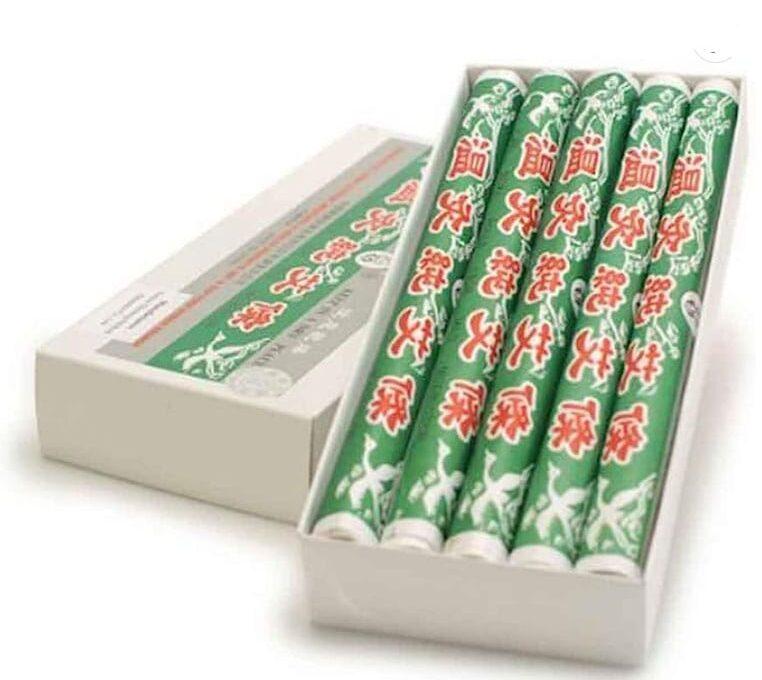
Pure Moxa Rolls for Mild Moxibustion (A Box of 10 Rolls)
This is a box of 10 pure, good quality moxa rolls containing the mugwort herb for do-it-yourself (DIY) mild moxibustion acupoint treatments. Each stick disperses uniform and slow heat through indirect moxa for up to 45 minutes.

10-Year Premium Moxibustion Set
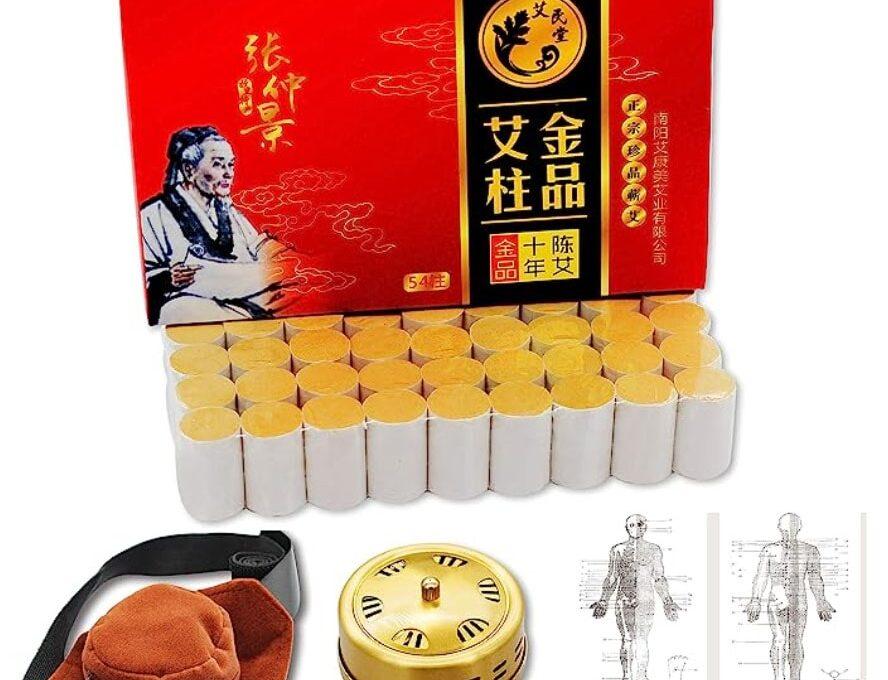
This 10-year premium moxibustion set consists of 54 moxibustion rolls, 1 copper burner box (optional), 1 smokeless cloth bag (optional) and 1 English acupoint map (optional). You should definitely get this set for moxibustion benefits such as relaxation of muscles and joint pains.
- This product is made of high quality moxa velvet stored for 10 years. 1kg of moxa velvet is made from every 60kg of high quality mugwort leaves from the raw mugwort plant.
- The mugwort leaves are harvested from mugwort plants planted on the Funiu mountain at the south foot of Qinling Mountain, with the best climatic conditions for the species.
- When used together with the burner box and cloth bag, it is a safe moxa treatment with no strong and pungent smell.
Conclusion
Moxibustion is a time-honoured external therapy rooted in TCM that promotes blood flow and ‘qi’ circulation to maintain overall health. Scientific evidence is limited, with effectiveness dependent on individual health conditions and synergistic use with acupuncture. For many seeking alternatives to Western medicine, moxibustion offers fulfilling relief.
Though generally safe, rare complications can occur. It is essential to consult qualified medical professionals before undergoing moxibustion.
Moreover, moxibustion’s potential to alleviate both physical symptoms and emotional stress highlights its role in holistic health approaches, making it a valuable practice for managing anxiety, stress, and mental wellbeing in today’s fast-paced lives.